Choose your language
 English


Choose your currency
€ - eur
English
Your cart is empty.
Geplaatst op 30-08-2024 door Frank Andringa
Moisture in your watch can be annoying, but it does not always mean your watch is ruined. In this WatchXL guide, we explain what causes condensation under the glass, when moisture becomes harmful, how water resistance works and what you should do to protect your watch.

Discovering moisture in your men’s or women’s watch can be frustrating. Watches are not designed to have water or condensation inside the case, because moisture can affect the movement, the dial, the hands and the internal components.
Still, moisture in a watch does not always mean your timepiece is beyond repair. First, it is important to understand how the moisture entered the watch and whether you are dealing with light condensation or actual water droplets.
Not every watch that is described as water resistant is suitable for showering, swimming or snorkelling. Many watches are only splash resistant. If you want to swim or snorkel with your watch, choose a proper water resistant model or a real diving watch. Diving watches are suitable for use during snorkelling or diving, depending on their specifications.
A watch that is water resistant to at least 10 ATM is generally suitable for swimming and snorkelling. Want to learn more about water resistance? Also read 'This is how waterproof your watch is'.
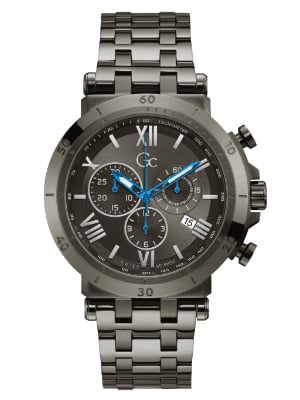
Gc watch, water resistant up to 10 ATM.
The first thing to find out is how the moisture entered your watch. Did you walk through heavy rain? Did you forget to take your watch off before swimming or showering? Did you wear it while exercising? Or did you move from a very cold environment into a warm room?
There are several reasons why condensation can appear inside a watch. It does not always mean the watch is defective. A large temperature difference can cause water vapour to form under the glass, especially if a small amount of moisture was already present inside the case.
Also read 'My watch is broken! Ten common faults on watches'.
Condensation on the inside of your watch glass usually means moisture has found a way into the case. This can happen when the crown has not been closed properly, when the glass is damaged, or when the gasket has become old and no longer seals the watch correctly.
Water resistance is usually stated on the case back, and sometimes on the dial. If your watch is no longer properly sealed, the indicated water resistance may no longer be reliable. In that case, it is wise to visit a watchmaker or jeweller.
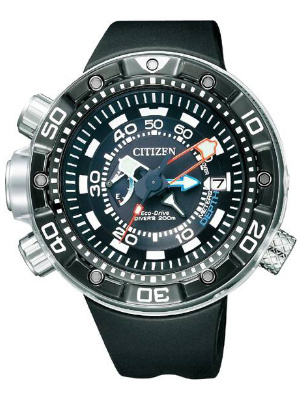
Citizen diving watch with ISO certificate.
Watches do not like moisture on the inside. Light condensation under the glass is mainly annoying at first, but it can become harmful if it remains inside for too long. Moisture can lead to corrosion, stains on the dial and problems with the movement.
If you see actual water drops inside the watch, do not wait. Take the watch to a jeweller or watchmaker quickly. The longer moisture stays inside, the higher the risk of damage.
On almost all watches, the water resistance is shown on the case back. Sometimes it is also printed on the dial. You may see it written in metres, ATM or bar. These terms all refer to water pressure.
Watches are tested for water resistance under ideal factory conditions. If a watch is water resistant to 100 metres, also called 10 bar or 10 ATM, this does not mean you can safely dive to a depth of 100 metres with it. Movement under water creates extra pressure on the watch, which can allow water to enter.
3 ATM, 3 bar or 30 metres:
Your watch is splash resistant. You can wear it while washing your hands, but be careful with water. It is not suitable for showering, swimming or diving. Also be careful in heavy rain.
5 ATM, 5 bar or 50 metres:
A watch with 5 ATM water resistance is generally suitable for showering, but it is not recommended for swimming.
10 ATM, 10 bar or 100 metres:
These watches are suitable for swimming and snorkelling, but not for diving. View These watches are waterproof to 10ATM>.
20 ATM, 20 bar or 200 metres:
Suitable for swimming and diving in seas or lakes. Not suitable for deep sea diving.
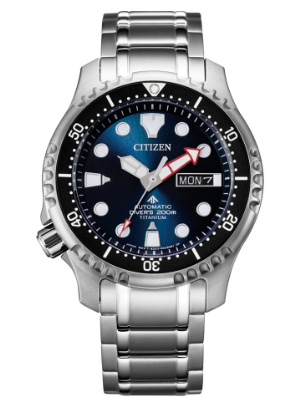
Citizen Promaster Marine diving watch, water resistant to 200 metres.
100 ATM, 100 bar or 1000 metres:
Suitable for deep sea diving.
Are you looking for a watch that you can wear while swimming, snorkelling or diving? These diving watches are built to handle water well.
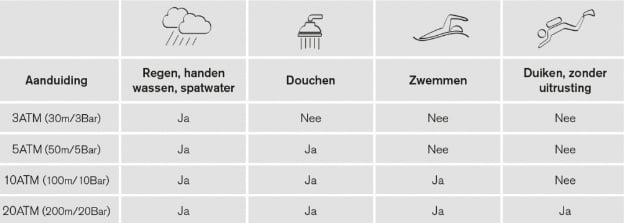
How waterproof is your watch? Use the water resistance rating as your guide.
Do you have condensation under the glass of your watch? Put the watch away for a while in a warm and dry place. If possible, carefully pull the crown into the outermost position, the same position you use to set the time. This allows moisture to escape more easily.
The condensation came in, so in some cases it can also come out again. Wait patiently until the glass clears. You can place the watch in a warm spot or in sunlight. Another option is to place the watch in a bowl of rice, as rice absorbs moisture.
Do not forget to press or screw the crown closed again afterwards. A watch should never come into contact with water while the crown is open.
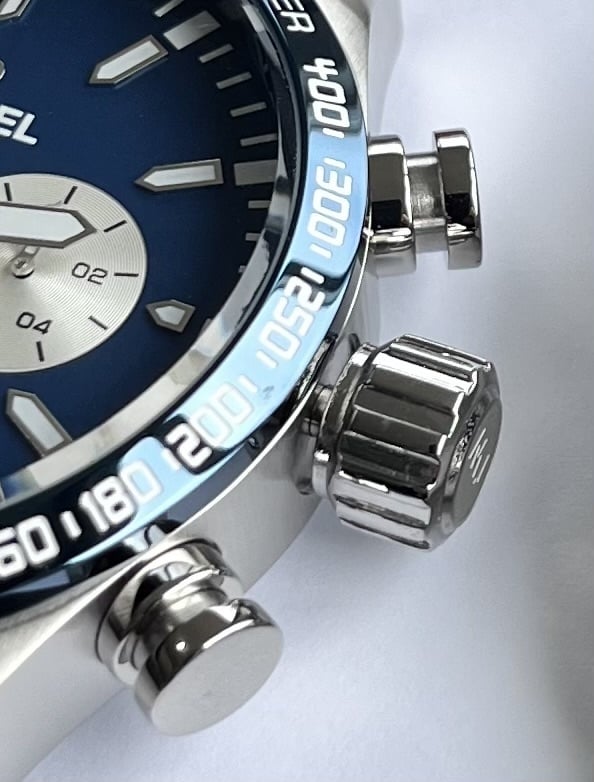
Watch with an open crown to help moisture escape.
Using a hairdryer may seem like a quick solution, but we strongly advise against it. Heat can cause more damage than the moisture itself. It can affect gaskets, increase pressure inside the case and damage delicate components.
If the condensation is still visible after several days, or if it keeps coming back, the watch is probably no longer properly water resistant. Visit a jeweller or watchmaker. The case back may not be closed properly, the gasket may be worn, or moisture may be entering through the crown or another vulnerable part.
Also read Watch battery replacement? Recognise a watch with a flat battery!
Water damage caused by moisture inside the watch may be covered by warranty if the problem is due to a manufacturing fault and not caused by your own actions. Brands usually test watches with water damage to check whether the water resistance is still correct.
If the water resistance test shows that the watch is properly sealed, the moisture likely entered in another way. This can happen when the crown was not pushed in or screwed down correctly. In that case, the damage is usually not covered by warranty.
Condensation in your watch can sometimes disappear on its own, but visible water drops or recurring moisture should always be checked by a jeweller or watchmaker. Keep the watch away from water, never use a hairdryer and always make sure the crown is properly closed before wearing the watch again.
Do you still have questions after reading this Watch News? Then feel free to contact us. We will be happy to advise you.