Choose your language
 English


Choose your currency
€ - eur
English
Your cart is empty.
Geplaatst op 29-05-2024 door Marc Hut
A 50 m water resistance rating does not mean you can dive 50 metres deep. ATM, bar and metres describe pressure resistance. This guide explains what 3 ATM, 5 ATM, 10 ATM and 20 ATM mean in practice and when a watch is actually suitable for swimming or diving.
3 ATM / 30 metres
Suitable for rain, hand washing and occasional splashes. Not recommended for swimming.
5 ATM / 50 metres
Suitable for everyday water exposure. Some manufacturers allow swimming, but always check the specifications of your watch.
10 ATM / 100 metres
Generally suitable for swimming, snorkelling and many water sports. Not automatically suitable for scuba diving.
20 ATM / 200 metres
Suitable for more demanding use in and around water. For scuba diving, choose a watch specifically designed and certified for diving.
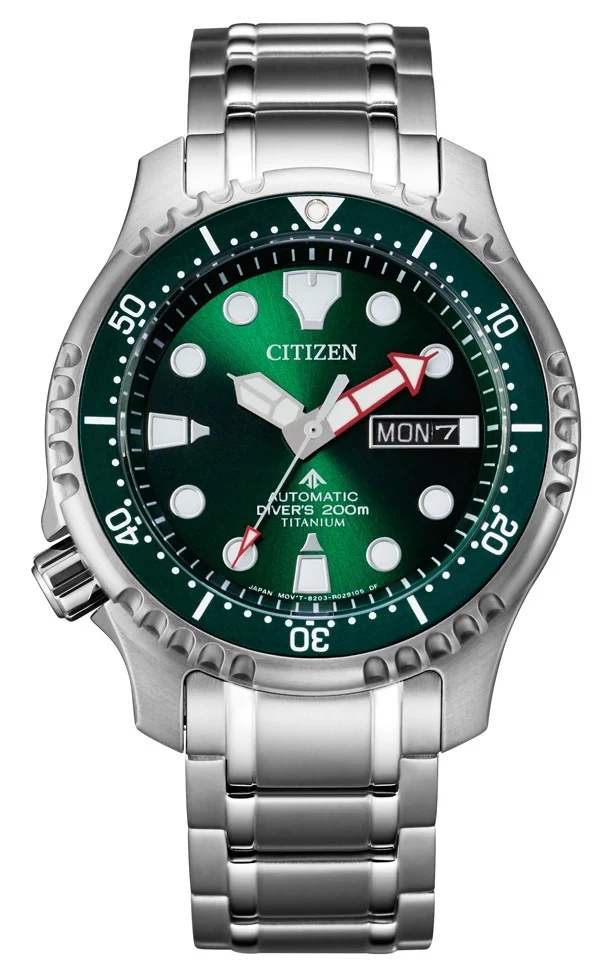
DIVER'S 200 m / ISO dive watch
Designed specifically for scuba diving and tested to meet additional requirements for professional underwater use.
Look at the dial, specifications or case back of a watch and you may see a rating such as 30 m, 50 m, 100 m, 3 ATM, 5 ATM or 10 bar. These figures describe the watch's resistance to water pressure under specified conditions.
The number in metres should not simply be interpreted as the depth you can safely dive to. A watch marked 50 metres is therefore not necessarily a watch you should take 50 metres underwater.
ATM and bar are pressure measurements. As a practical approximation, 1 ATM ≈ 1 bar ≈ 10 metres of water pressure. What you can actually do with the watch depends on its construction, condition and the manufacturer's instructions.
3 ATM / 30 m
General use: splashes and rain.
WatchXL advice: do not swim or dive with the watch.
5 ATM / 50 m
General use: enhanced everyday water resistance.
WatchXL advice: some manufacturers allow ordinary swimming. Always check the specifications of your model.
10 ATM / 100 m
General use: swimming and many water sports.
WatchXL advice: suitable for more substantial contact with water, but not automatically suitable for scuba diving.
20 ATM / 200 m
General use: high water resistance.
WatchXL advice: check whether the watch is specifically designed and approved for diving.
DIVER'S 200 m / certified diver
General use: specifically designed for diving.
WatchXL advice: this is the better choice when you need a watch for scuba diving.
These ratings are a general guide. Water resistance recommendations can differ between manufacturers and individual models. Always follow the instructions supplied with your watch.
A watch rated to 3 ATM, 3 bar or 30 metres is designed primarily for everyday contact with small amounts of water. Think of rain, washing your hands or an accidental splash.
Do not interpret "30 metres" as permission to swim 30 metres underwater. A 3 ATM watch is generally not suitable for swimming, snorkelling or diving.
At 5 ATM, 5 bar or 50 metres, a watch has greater protection against water than a 3 ATM model. However, this is exactly where overly simple water resistance guides can become misleading.
Some manufacturers specify their 5 bar watches as suitable for ordinary swimming, while recommendations can differ for other watches. Therefore, always check the instructions for the specific model rather than relying solely on the number printed on the case.
We would also be cautious with hot showers, baths, saunas and steam. Heat and temperature changes can affect seals, while soap may also be undesirable around gaskets.
A watch rated to 10 ATM, 10 bar or 100 metres is much better suited to regular contact with water. Depending on the manufacturer, this level is commonly intended for swimming and various water sports.
That does not automatically make it a scuba diving watch. A proper diving watch is designed for a different purpose and must meet additional requirements, such as underwater readability and safe measurement of dive time.
A 20 ATM or 200 metre rating indicates substantial water resistance. It is suitable for much more demanding water use than a 3 or 5 ATM watch.
But the rating alone does not tell the whole story. If you intend to use a watch for scuba diving, look for a model that is specifically designed and marked as a diving watch rather than choosing only on the basis of its 200 metre rating.
A true dive watch is about more than water resistance. It should remain easy to read underwater and provide a reliable way to monitor elapsed dive time.
Dive watches commonly have features such as a unidirectional diving bezel, luminous hands and markers, a secure crown and robust construction. A unidirectional diving bezel can be used to track elapsed time underwater and is designed to rotate in only one direction.
If diving is your intended use, choose a watch made specifically for that purpose. Read our complete guide: what is a diving watch and what should you look for?
Need a watch for swimming or diving?
Explore WatchXL's collection of water sports and dive watches from brands including Citizen, Luminox, Bulova and Timex.
ISO 6425 is an international standard covering requirements and test methods for watches designed for diving. The standard applies to diving watches designed for use at depths of at least 100 metres and includes requirements beyond water resistance alone.
That distinction matters. A standard watch marked "200 m" and a purpose built diver marked DIVER'S 200 m are not necessarily the same thing.
Want to know exactly what is tested? Read our detailed guide to dive watches and the ISO 6425 standard.
Citizen has an extensive range of watches designed for use in and around water. The Citizen Promaster Marine collection includes purpose built dive watches, including models with additional diving functions.
At WatchXL you can browse both our Citizen diving watches and the complete Citizen Promaster Marine collection.
Water resistance can decrease as a watch ages. Gaskets can wear or dry out, the crown can become damaged and impacts can affect the seal around the crystal or case back.
This is especially important if you regularly swim or dive with your watch. Having its water resistance checked periodically can help reduce the risk of moisture entering the case.
No. The metre rating represents a level of pressure resistance under test conditions. It should not be interpreted literally as a safe diving depth.
It depends on the watch and manufacturer. Some manufacturers classify 5 bar watches as suitable for ordinary swimming. Always check the instructions for the specific model before taking it into the water.
A 10 ATM or 100 metre watch is commonly suitable for swimming and various water sports, depending on the manufacturer's specifications and the condition of the watch.
No. A 20 ATM rating indicates high water resistance, but a true diving watch is designed specifically for diving and may comply with additional standards such as ISO 6425.
It is better not to make showering the benchmark for water resistance. Hot water, steam, soap and temperature changes create different conditions from ordinary swimming. Follow the manufacturer's instructions for your watch.
Both are pressure measurements used to describe watch water resistance. For practical watch specifications, 10 ATM and 10 bar are commonly treated as approximately equivalent to a 100 metre rating.
The water resistance rating on a watch tells you how much water pressure it is designed to withstand, but it is not a literal safe diving depth. 3 ATM is mainly suitable for splashes, 5 ATM offers greater everyday protection, 10 ATM is commonly suitable for swimming and water sports, and 20 ATM provides substantial water resistance. For scuba diving, choose a genuine dive watch specifically designed for underwater use and always follow the manufacturer's instructions.
Moisture in your watch? What to do
What is a diving watch and what should you look for?